Single Page Application Development Services

145+
5,0

Slow websites, disconnected systems, and manual data entry create friction across the customer journey and internal operations. Webdelo provides single page application (SPA) development services that transform complex workflows into fast, efficient digital platforms. We build B2B portals, dealer platforms, customer dashboards, and business applications designed for performance, scalability, and ease of use.

Your users benefit from a responsive experience that feels seamless and intuitive, with content updating instantly without full page reloads. Your organization gains a secure, scalable platform that integrates with existing CRM, ERP, accounting, and operational systems.

All development is performed by our in-house engineering team. From architecture and implementation to support and ongoing improvements, we maintain full ownership of the delivery process, ensuring accountability, continuity, and long-term platform stability.

1 Responsive Design

Flawless interface performance on smartphones, tablets, and PCs.

trend Integrations with ERP and CRM

Requests, statuses, and client data are transferred automatically without manual entry.

audits SEO Foundation

Server-Side Rendering (SSR), microdata, and technical optimization for search engines.

team SLA Support

We are developing functionality and guaranteeing performance after the release

Cases

Our SPA Development Case Studies

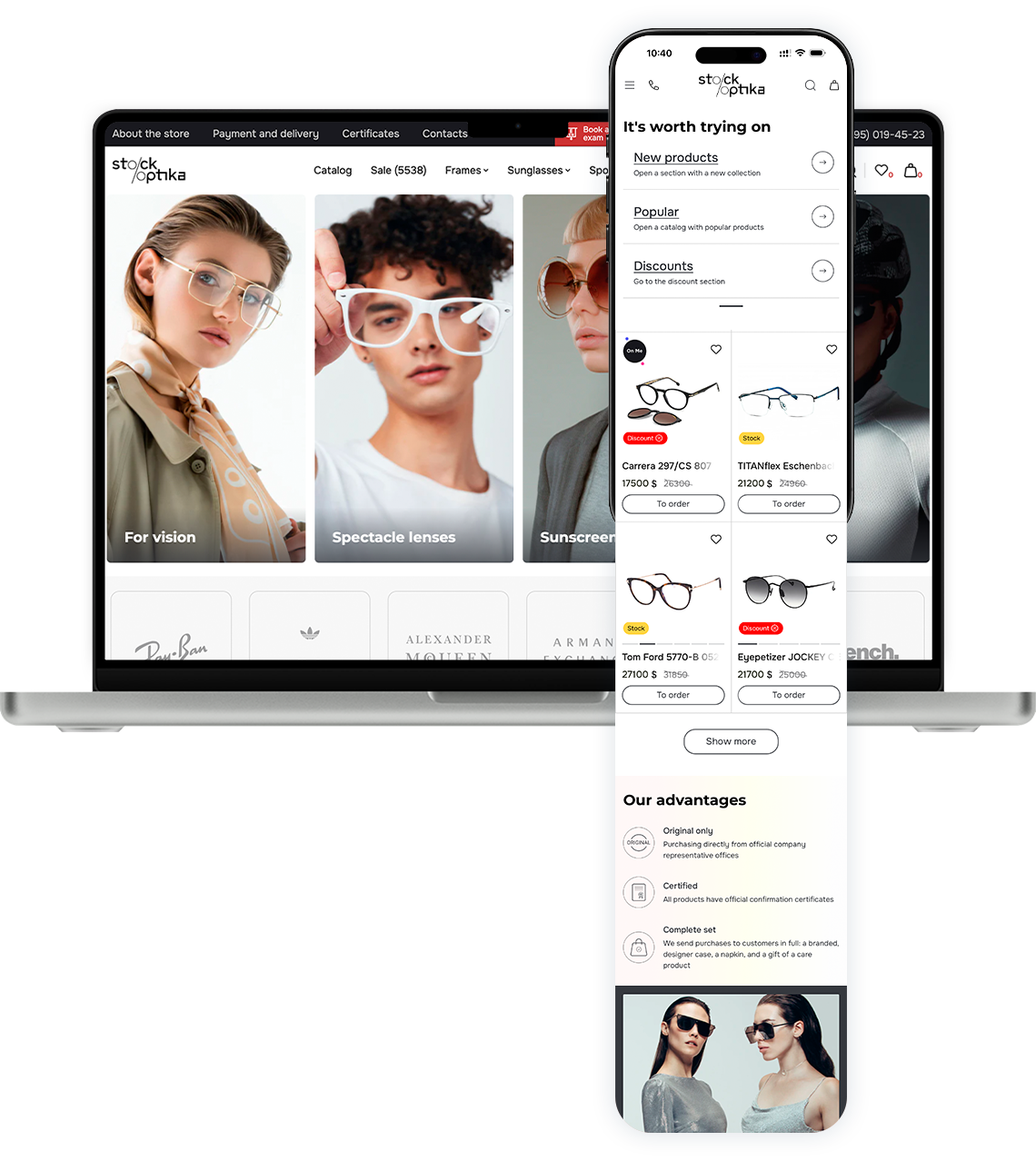
StockOptikaEN

StockOptika Eyewear Store

We developed an online eyewear store using Laravel, Vue, and Nuxt. The MVP was launched in about 4 months: we designed the architecture, UI/UX, frontend, backend, and SEO structure. After release, we continued to develop the project by improving the catalog, search, brand navigation, and functionality based on real user scenarios.

4 months

MVP from start to launch

7 specialists

Architecture, design, development, SEO

Regions:
Russia Russia
global CIS
StockOptika Case
Formats

What Problems Do Single Page Application Development Services Solve?

A traditional website reloads the entire page with every click. A SPA updates only the necessary data: tables, forms, or charts. The interface doesn't "blink" and responds instantly.

  • Scalability and reliability
    Microservices architecture allows adding new modules without site downtime. The system handles high loads and thousands of concurrent connections.
  • Resilience to failures
    Caching and reducing transferred data volume keep the interface functional even with unstable internet connections.
  • Role-based access and security
    We set up multi-level access control systems (RBAC). Every employee sees only their data. We integrate authorization via your Active Directory, ERP, or CRM.
  • Single stack for all devices
    Sales, logistics, and marketing departments work in the same environment on laptops, tablets, or smartphones. A single codebase speeds up and lowers the cost of system development.
  • Real-time analytics
    We embed dashboards and BI modules to monitor key performance indicators across departments.
Dmitrii Cercel Tech Lead
Expert opinion

«A fast SPA interface is useless if you 'stretch' it directly over a slow 1C or an outdated ERP. The site will load instantly but will wait endlessly for data from the database. To avoid this, we implement intermediate API gateways and caching. As a result, the interface 'flies', and your internal accounting systems are protected from overloads.»

Dmitry Cherchel
Tech Lead at Webdelo
Contact us
Prices

Single Page Application Development Services Pricing

The final cost is calculated after a business process audit, assessing integration complexity, and the number of user roles.

Package Scope Timeframe Price
Basic UI/UX prototype, front-end on React or Vue, REST API, integration with 1 CRM, basic SEO 2-3 months After the consultation
Standard Everything in Basic + back-end development (Node.js or .NET), ERP/1C integration, client dashboard, user registration, role management 4-6 months After the consultation
Premium Scaling for high-load, fault tolerance, microservices architecture, integration with multiple CRMs/ERPs and payment gateways, custom analytics, 99.9% SLA 6-10 months After the consultation
Structure

What is Included in SPA Development

Building a SPA involves more than just design and interface development. We assemble the entire system – from business logic, roles, and integrations to security, analytics, launch, and post-release support.

Business analytics and process research
We dive into the tasks of your sales, logistics, and marketing departments. Modern B2B portals are built on SPA or micro-frontend architectures and require a clear connection to business goals.
UI/UX design
We create a prototype reflecting roles (manager, dealer, client) and displaying price lists, requests, and approvals. Interfaces are designed with ADA and WCAG compliance for accessibility.
Architecture and tech stack selection
We use popular frameworks (React, Next.js, Vue, Angular) and TypeScript. React currently dominates the B2B portal market, but Angular and Vue are also popular. The back-end is built on Node.js, .NET, Java, or Python, utilizing microservices and an API-first approach.
Integration with client systems
We configure data exchange with ERPs, CRMs, warehouses, and payment gateways. A dedicated API gateway ensures security and manages the load.
Feature development
We implement personal dashboards, catalogs, carts, approval modules, document uploads, counters, and notifications. Users see their specific prices and terms based on their roles.
Testing and optimization
We use automated tests, cross-browser checks, and load testing. Internal tools like Chrome DevTools help debug the SPA and speed up loading.
SEO setup and analytics
To improve indexing, we apply Server-Side Rendering (SSR), microdata, dynamic meta tags, and sitemap configurations. Analytics tools are tailored for the SPA structure.
Pre-launch preparation
We set up CI/CD, containerization (Docker, Kubernetes), monitoring (Prometheus, Grafana), and implement a logging system.
Training and documentation
Your team receives content management and metrics analysis manuals, along with legal documents (privacy policy, data processing consent).

Andrew Popov, CTO, Founder
Expert opinion

«Without staging, auto-tests, and CI/CD, even a fast SPA interface will soon turn into technical debt. We immediately design a scalable system that doesn't depend on a single developer and is ready for SLA-backed support.»

Andrey Popov
CTO Webdelo
Request a Consultation
Stages

Turnkey SPA Development Stages

The development process at Webdelo is fully documented. We divide the work into clear sprints so you are never left in an information vacuum or handed a "black box" product. At each step, we deliver a specific artifact: from a business process flowchart to ready functionality on a test server. Your dedicated project manager acts as a single point of contact throughout the journey.

Below is a basic roadmap with estimated timelines (final duration depends on integration scale):

STAGE 1
Request and Consultation

(1–3 days)
After your request, we hold a free introductory meeting: we discuss business goals, current system limitations, and determine the scope of the future project.

STAGE 2
Analytics and SRS Preparation

(2–4 weeks)
We analyze business processes and design the data architecture. We prepare a detailed Software Requirements Specification (SRS), UX prototypes, and describe the user role model (who gets access to what data).

STAGE 3
Contract and Planning

(1–2 weeks)
We agree on the budget, deadlines, and release phases. We legally establish warranty obligations, non-disclosure agreements (NDA), and future support terms.

STAGE 4
Front-end and Back-end Development

(2–5 months)
We build interfaces, write APIs, and set up integrations with your accounting/ERP systems. We work using an iterative model: we hold regular calls and show intermediate product demos.

STAGE 5
Testing and Acceptance

(2–4 weeks)
We conduct automated, manual, and load testing. You get access to an isolated testing environment (Staging) so your team can verify the logic before the official release.

STAGE 6
Launch and Training

(1–2 weeks)
We deploy the system to production servers via a configured CI/CD pipeline. We hand over technical documentation and conduct training for your employees.

STAGE 7
Support and Development

(Continuous, under SLA)
After project delivery, we move to the operational phase. We provide 24/7 monitoring, resolve incidents according to SLA priorities, and develop new modules for growing business needs.

Advantages

Why Choose Us as Your Single Page Application Development Company

Webdelo develops SPA applications without involving subcontractors. Our team consists of 50 in-house specialists: analysts, engineers, QA testers, and marketers. Before starting, we sign an NDA and fix responsibilities in the contract. After release, we support the system under an SLA.

SPAs for B2B Scenarios

We develop SPA applications for companies where the website acts as a system, not just a set of pages. This can be a client dashboard, dealer portal, service platform, CRM interface, or internal department product.
Suitable for roles, requests, statuses, documents, and approvals
Helps connect departments, clients, partners, and internal processes

In-House Team and Deadline Control

Analysts, designers, developers, testers, and a project manager work on the project. We divide development into stages, fix deadlines and areas of responsibility in the contract, show intermediate results, and keep the process under control.
We do not outsource development to random contractors
We lead the project by stages: analytics, prototype, design, development, testing, launch

Integrations with CRM, ERP, and 1C

We connect the SPA application to your internal company systems so data isn't transferred manually. Requests, clients, invoices, statuses, inventory, and documents are automatically transferred between the interface and your operational services.
We integrate CRMs, ERPs, 1C, warehouse, and payment systems
We reduce manual routine and the risk of errors between departments

Post-Launch Support

After the SPA application is released, new roles, scenarios, integrations, security requirements, and department tasks emerge. We take this over for maintenance so the app doesn't rely on random tweaks and turn into technical debt.
We monitor stability and quickly resolve technical issues
We scale the app according to a plan: new modules, integrations, and improvements without breaking current logic
Development

SPA Development in 2026

SEO for SPAs
We configure the SPA so pages are correctly indexed in search. We refine the structure, server-side rendering, meta tags, loading speed, and the technical foundation for future organic traffic growth.
Web Analytics and Performance Control
We configure metrics, events, goals, and funnels to see how users navigate from entry to request or dashboard action. This helps evaluate marketing, UX, and real drop-off points.
Advertising to Attract B2B Clients
Fintech and Trading platforms image
We run contextual and targeted advertising if the project needs leads, partners, or new clients. We set up campaigns in Yandex.Direct, Google Ads, tracking cost per lead and request quality.
Feature Expansion
We add new modules, roles, scenarios, integrations, and reports as the company grows. Updates follow a plan: no chaotic edits, logic conflicts, or risks of breaking working processes.
Technical Support
We ensure the SPA application runs stably post-release. We update libraries, patch vulnerabilities, fix bugs, test performance, and adapt functionality to new business tasks.
We view an SPA as a long-term business asset, continuously improving platform performance, functionality, integrations, and the analytics needed to measure growth and operational effectiveness.
Technologies

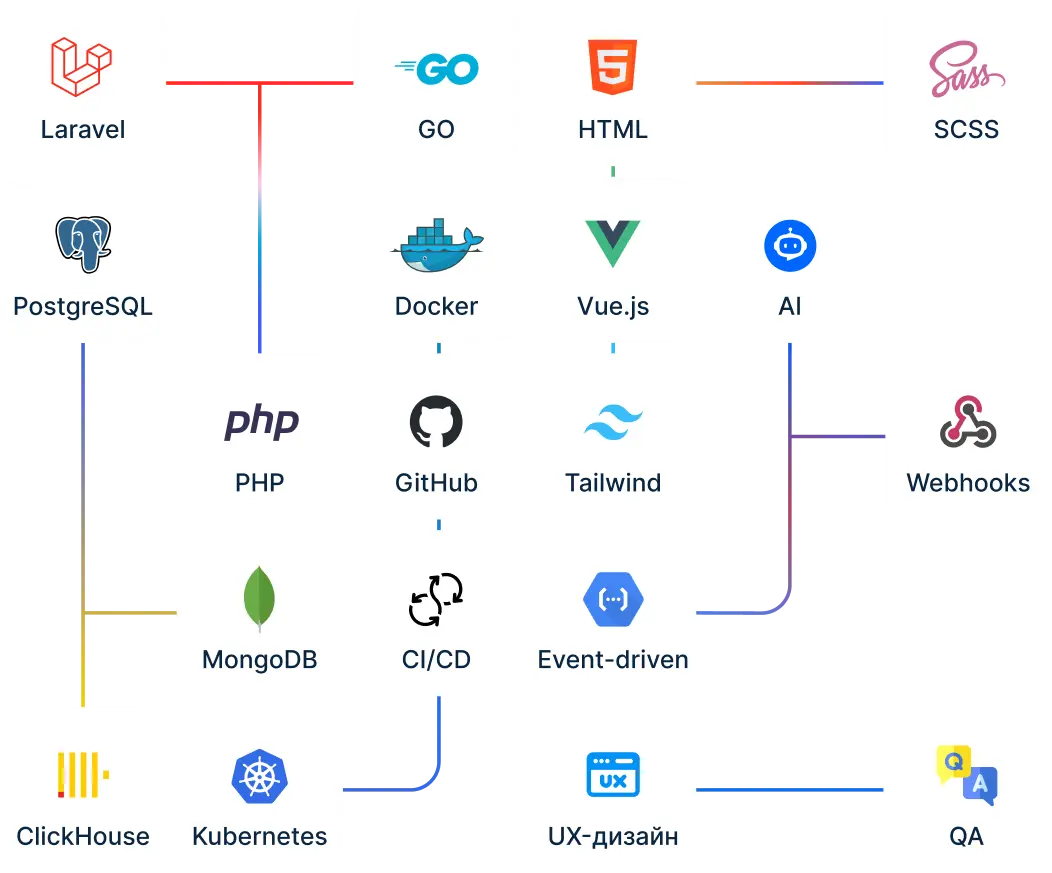
Our SPA Development Technology Stack

We select technologies based on business requirements, scalability goals, integration needs, security requirements, and expected system load—not industry trends.
Frontend: React/Next.js, Vue/Nuxt.js, Angular, TypeScript
Backend: Node.js, .NET, Java, Python, Go
Integrations & APIs: REST, GraphQL, CRM and ERP integrations, Enterprise business systems, warehouse and logistics platforms, payment gateways
Data & Search: PostgreSQL, MySQL, MongoDB, Redis, Elasticsearch
Infrastructure & DevOps: Docker, Kubernetes, CI/CD pipelines, monitoring and observability, logging and backup systems
Security: OAuth2, OpenID Connect, role-based access control (RBAC), protection against common web vulnerabilities, Web Application Firewall (WAF), secure authentication and authorization controls
Technology decisions are made after a technical and business assessment. The objective is not simply to build an SPA—it is to create a platform that remains reliable under load, integrates effectively with business systems, and can scale without requiring major architectural changes in the future.
Security

Legal Transparency and Technical Security

We design and maintain digital platforms with security, privacy, and regulatory requirements in mind. Our approach combines technical safeguards, governance controls, and industry best practices to help organizations operate securely and confidently.

GDPR Compliance

GDPR Compliance

Organizations serving users within the European Union must comply with GDPR requirements regarding transparency, lawful processing, data minimization, user rights, and security controls. We incorporate these considerations into platform architecture and workflows from the beginning.

Data Protection and Security Controls

Data Protection and Security Controls

We implement modern security practices designed to protect business and customer data, including: HTTPS and TLS encryption, secure password storage and authentication mechanisms, encrypted backups and data protection measures, security monitoring and audit logging where required.

Confidentiality and Information Protection

Confidentiality and Information Protection

Confidentiality is built into our delivery process. Non-Disclosure Agreements (NDAs) are available before discovery, audits, or system access is granted. Access to client information is limited according to business requirements and the principle of least privilege. Our goal is to help organizations protect sensitive business information, customer data, and critical systems throughout the software lifecycle.
Contacts

Ready to discuss your project?

Frequently Asked Questions

What determines the cost of SPA development?
Project cost depends on business requirements, feature complexity, user roles, third-party integrations, expected traffic, security requirements, and overall system architecture. More advanced platforms with extensive integrations and custom workflows typically require greater investment than simpler applications.
How long does development take?
Most SPA projects take between 3 and 7 months, depending on project scope, technical complexity, stakeholder feedback cycles, and integration requirements.
What technologies do you use?
Our teams work with React, Vue, Angular, Node.js, Java, .NET, and Python. The final technology stack is selected based on project requirements, scalability goals, and existing infrastructure.
What services does Webdelo provide beyond development?
In addition to software development, we offer SEO, paid advertising management, analytics, technical support, maintenance, and business process automation services.
Can requirements change during development?
Yes. We follow an iterative development process that allows for ongoing feedback and refinement. Larger scope changes are evaluated separately to assess their impact on timeline and budget.
How can I monitor project progress?
Clients receive access to project management tools such as Jira or Trello, providing visibility into tasks, milestones, timelines, and project status. Regular review meetings and demonstrations are also conducted throughout development.
Will the application work on mobile devices?
Yes. All solutions are designed to be responsive across desktop, tablet, and mobile devices. Where appropriate, we can also implement Progressive Web App (PWA) functionality.
How do you approach security?
Security is integrated throughout the development lifecycle. Depending on project requirements, this may include HTTPS, secure authentication, role-based access controls, CSP policies, protection against common web vulnerabilities, encryption, logging, and security testing.
Can payment systems be integrated?
Yes. We integrate payment gateways and acquiring platforms, including Stripe, CloudPayments, and other regional or international payment providers.
How do I manage the application after launch?
We can provide administrative interfaces and content management capabilities that allow authorized users to manage content, users, workflows, and reporting without developer involvement.
Do you work with existing or legacy systems?
Yes. We frequently modernize existing applications, improve performance and security, migrate legacy platforms to modern architectures, and integrate new functionality without requiring a complete rebuild.
Terminology

Glossary

*
SPA (Single Page Application) — a web application that operates within a single interface without full page reloads. Content updates dynamically as users navigate, filter data, submit forms, and interact with the system, creating a faster and more responsive experience.
*
API-First Architecture — an approach where integrations and data exchange are designed before the interface layer. Websites, mobile applications, CRM systems, ERP platforms, and other services communicate through standardized APIs, improving scalability and interoperability.
*
Micro-Frontend Architecture — a method of building large applications by dividing the interface into independent modules. Different teams can develop, deploy, and maintain features separately while contributing to a unified user experience.
*
SSR (Server-Side Rendering) — a rendering approach where pages are generated on the server before being delivered to the browser. This can improve initial load performance, user experience, and search engine visibility.
*
PWA (Progressive Web App) — a web application that combines the accessibility of a website with features commonly associated with mobile applications, including home screen installation, offline functionality, and push notifications.
*
OAuth 2.0 & OpenID Connect — industry-standard protocols used for authentication, authorization, and Single Sign-On (SSO). They enable secure user access management while reducing the need for separate login systems.
*
WCAG (Web Content Accessibility Guidelines) — international accessibility standards designed to make digital products usable for people with visual, motor, auditory, cognitive, and other disabilities, helping organizations create more inclusive user experiences.
cookies We use Cookies

We use cookies to improve website performance, personalize content, and analyze traffic. You can choose which categories of cookies to allow. For more information, please see our Cookie Policy. You can change your preferences at any time.

Essential (Required)

Ensure the website functions properly (navigation, access to secure areas). Always enabled and can only be changed in your browser settings.

Analytics

Help us understand how you use the website so we can improve our services. Do not collect personal data. We use several analytics tools for this purpose.

Advertising

Used to deliver personalized ads and measure the effectiveness of advertising campaigns.