


ERP System Development in Germany

 5,0
5,0
Webdelo is an ERP development company that helps businesses automate internal operations through custom ERP systems tailored to their specific processes and goals.
We implement ERP as a standalone solution or develop a unified product that combines a web platform with a powerful ERP core for full business management.
Our systems bring together requests, team workflows, orders, documents, and analytics into one structured environment. They enable automated document and invoice generation, real-time calendar and booking management, client communication and notifications, route optimization, and scalable process automation across the entire business.
 40+ team members
Working in-house, without outsourcing or intermediaries.
 130+ projects
Delivered with a wide range of ERP automation solutions.
 Custom automation
Built around your business processes, without reliance on third-party subscriptions.
 Let's meet in person
in Germany. We operate officially in three countries.
Examples of Our Work
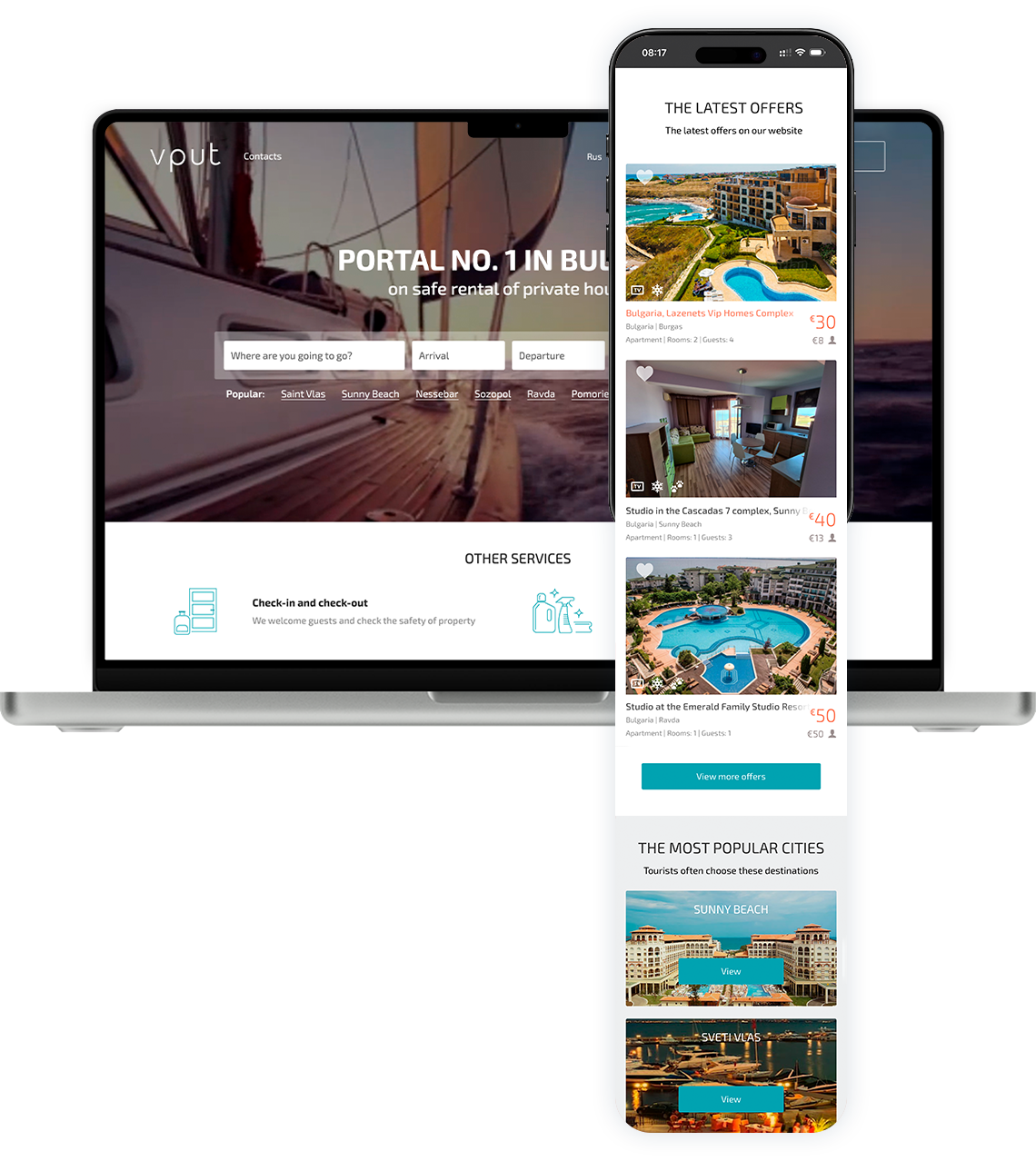
Real estate rental VPUT
Webdelo is the co-founder and developer of a portal that allows owners to advertise real estate properties (houses and apartments), managers to conduct moderation, and clients to book and rent housing.
The system includes an automation complex: internal correspondence, calendar and booking, invoicing, notifications by email and phone, reports on new objects on moderation and suspicious messages, as well as ordering additional services (transfer, cleaning, car rental).
added over all time
to reduce manager's tasks
 EU
EU

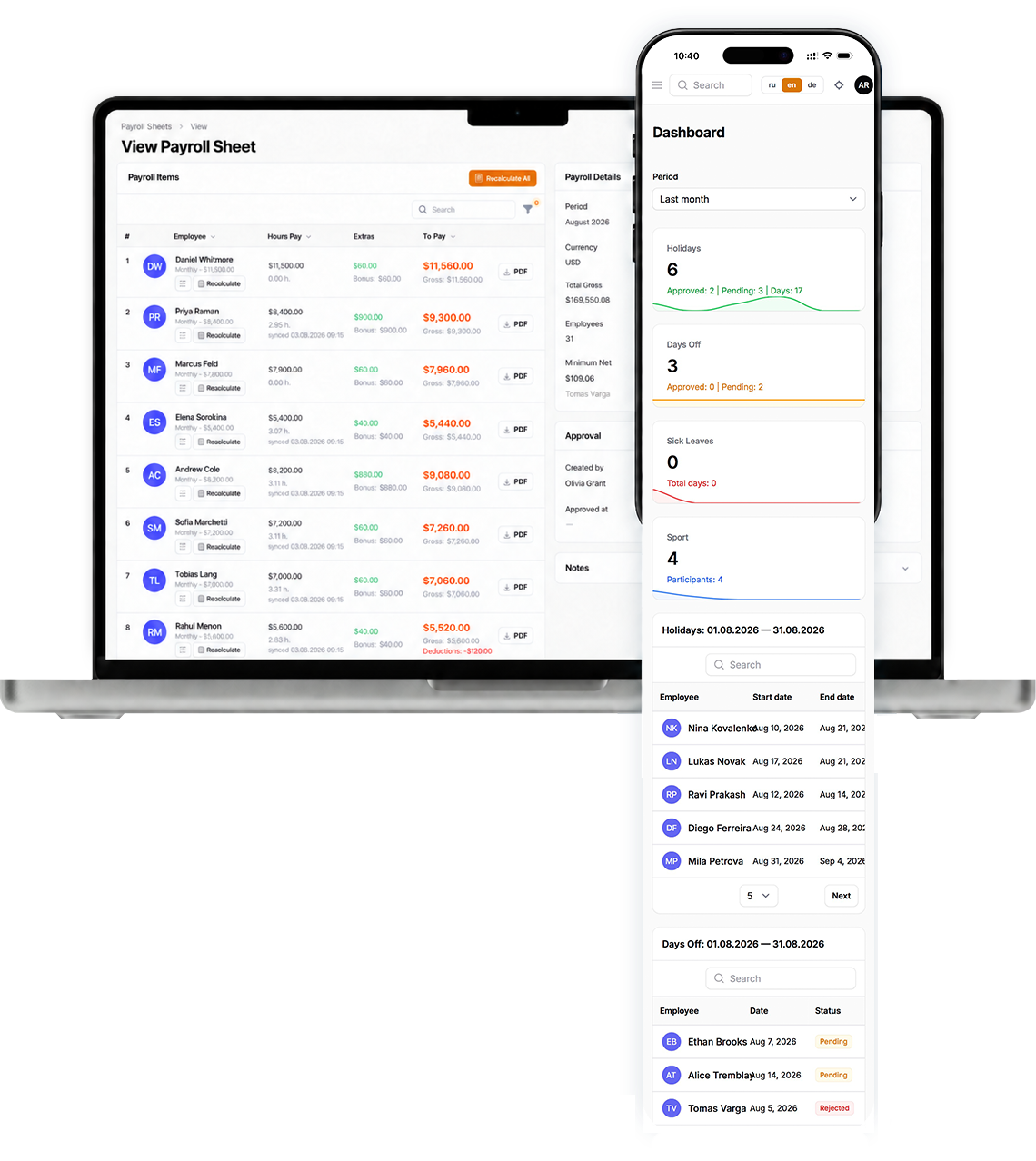
In-house ERP system
We have developed an in-house ERP system that integrates key team management processes into a single interface:
- HR record-keeping,
- vacation and sick leave,
- time tracking,
- payroll processing, and approvals.
We’ve automated repetitive tasks and integrated the system with Hubstaff, Worksection, Google Calendar, and Telegram so that data doesn’t have to be manually duplicated across different services. The system helps close the month faster, reduces the risk of errors in payroll calculations, and makes disputed transactions transparent even before payment. All changes are recorded, managers and employees have a single source of up-to-date data on working hours, absences, and payroll calculations.
to calculate the team’s time and payroll
vacation requests via Telegram, approval with one click
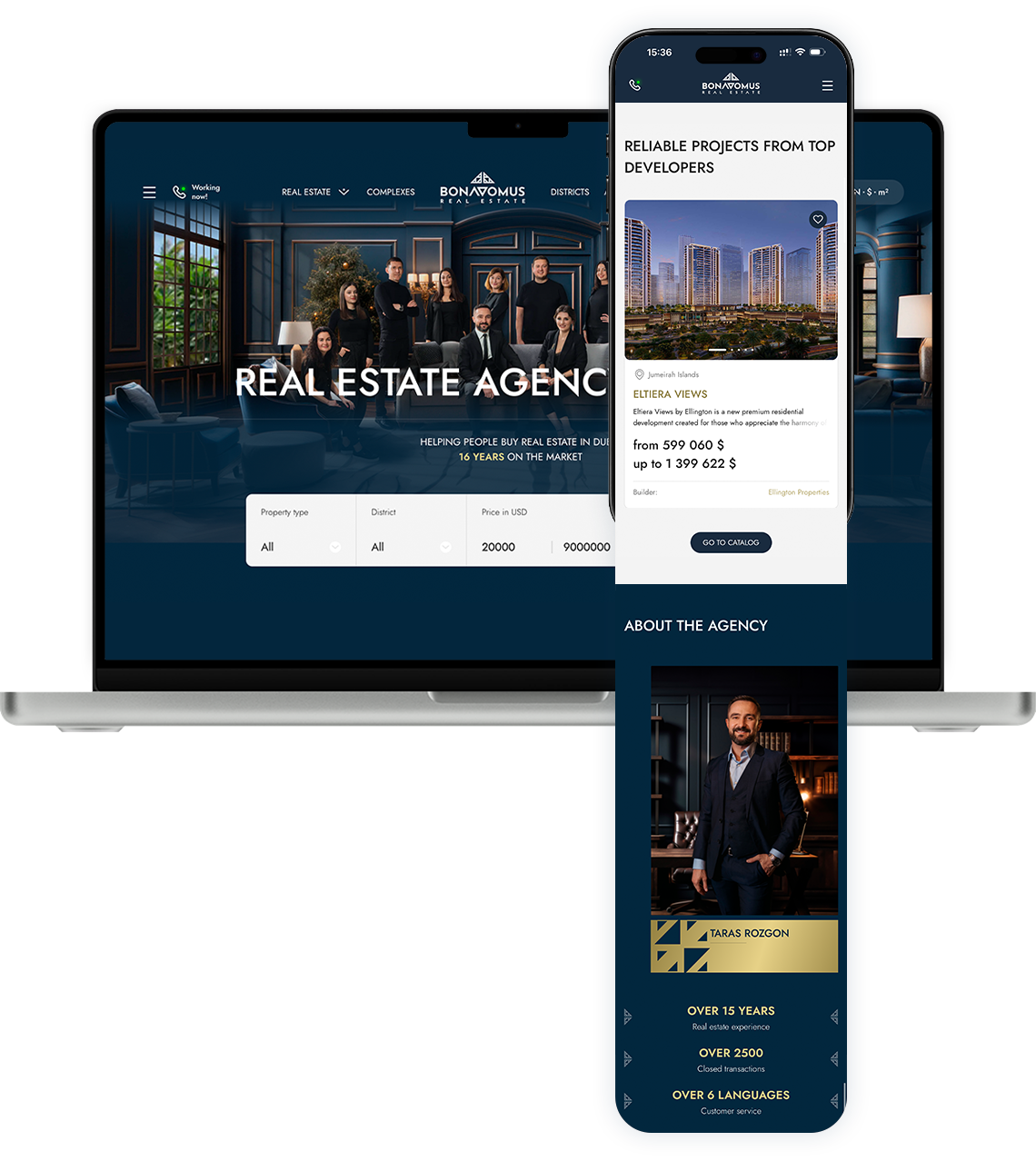
ERP BONADOMUS Real Estate Agency
We are a co-founder and development partner of a real estate portal operating in Dubai and the US.
The project includes:
- advanced automation, such as AI-powered generation of property descriptions, metadata, and image captions
- automated import and updates of the real estate catalog through the API (application programming interface) of a leading aggregator.
with added unique description
to reduce the load on managers
 US
US
 AE
AE
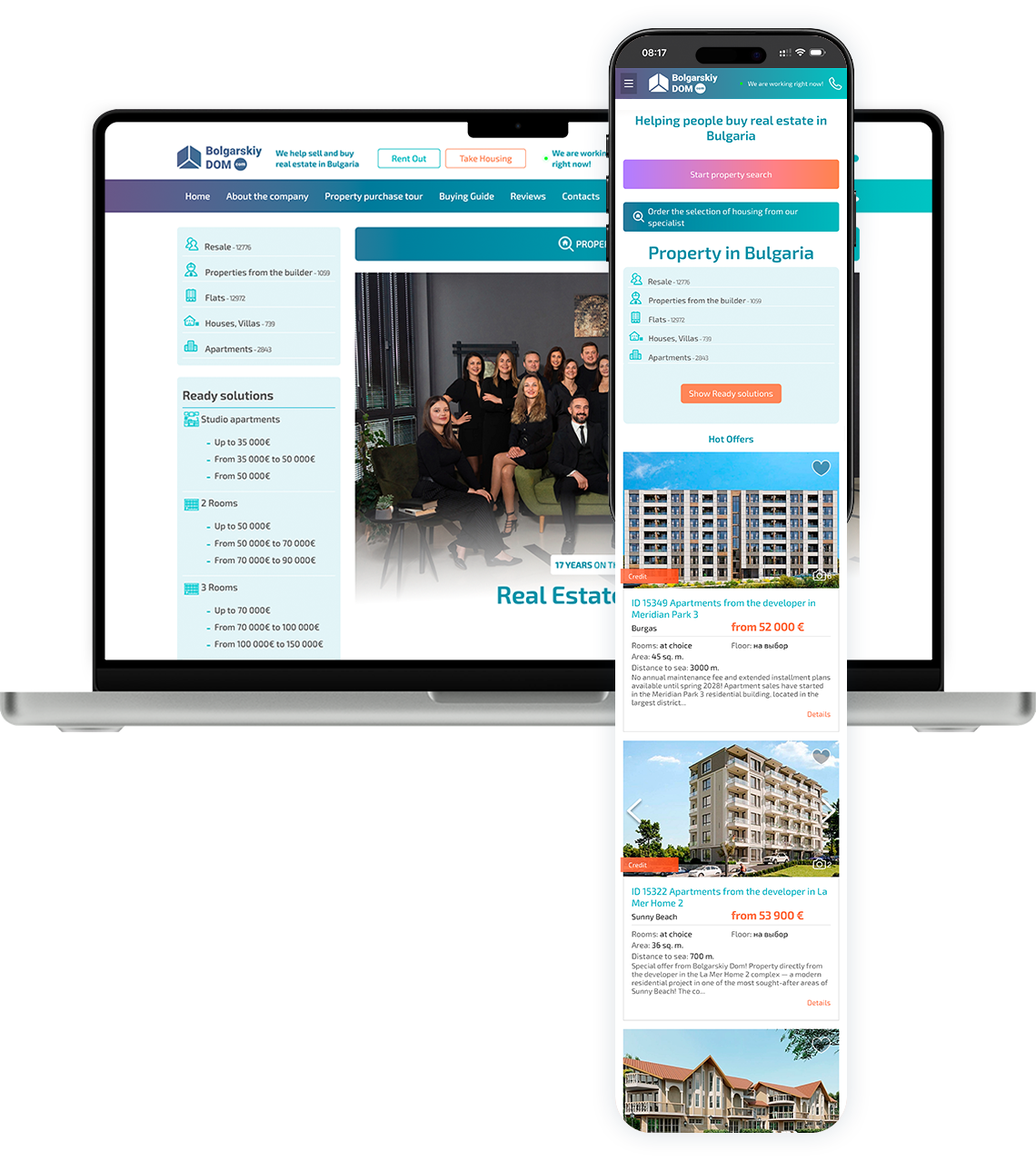
Real estate sales portal BolgarskiyDom
BolgarskiyDom — a real estate buying and selling portal with process automation:
- automatic collection of requests in CRM,
- management of objects and catalog,
- integrations, notifications, and tools for the effective work of managers.
with added unique description
for optimization of managers' work
EU
Who We Offer ERP Development To
Are your reports delayed? Do your employees spend too much time on manual tasks? Does your business rely on multiple subscriptions, such as a CRM ERP system , while data is scattered across spreadsheets, third-party tools, and CRM platforms?
We help solve this once and for all by implementing a custom ERP solution built specifically for your business.
We offer ERP software development for:

Timelines and Cost of Customized ERP Software
We will dive into your business processes, integration points, and security requirements. After that, we will determine the cost of ERP integration. Below are approximate timelines for integration for different types of business.
| What’s Included | Timeline | Cost | |
|---|---|---|---|
| Basic ERP for business management | Requests, clients, deals, invoices, documents, and basic analytics in one system. Suitable for companies that want to put things in order in processes and work without spreadsheets and manual accounting. | 4–6 months | on request |
| Manufacturing ERP | Production planning and control. Management of orders, workshop workload, actual prime cost, and product quality. Helps to plan production and reduce downtime. | 8–12 months | on request |
| Logistics and warehouse ERP | Supply and warehouse management. Address storage, batch control, movement of goods, and integration with logistics services. Allows you to manage inventory and optimize supplies. | 7–10 months | on request |
| ERP for trade and e-commerce | Goods, sales, and sales channels. Unified accounting of goods, integrations with online stores and POS (points of sale), management of prices and loyalty programs. | 6–9 months | on request |
| ERP for holdings and groups of companies | Finance and management of several legal entities. Data consolidation, intercompany settlements, financial reporting, treasury and HR (human resources) management. | 10–14 months | on request |
| BI and management analytics | Owner's dashboards with key business indicators in real-time. Helps to make decisions based on data. | Implemented in parallel with ERP | on request |
Related ERP services: development of web services and web applications, web design, and search engine optimization (SEO promotion).
Typical ERP Automations
An ERP unites the key processes of the company in one system. As a result, there is no need to use separate services and third-party crm ERP software — all data and operations work in a single contour.
In an ERP, you can automate:


Advantages of Webdelo in Corporate ERP Development
In addition to client projects, we create our own digital services and portals. This gives us practical experience in developing systems that work under heavy load and serve thousands of users.

We design systems for companies operating in the markets of the US, Europe, and the CIS countries. We take into account the operation of a website with several languages and currencies.
A coordinated team without third-party contractors. The staff includes more than 40 specialists: system architects, developers, and analysts.
We develop simple and convenient interfaces for companies with complex business processes. Management and managers work in an understandable system with statuses, dashboards, and automation of key operations. We take into account long sales cycles, multi-level supply chains, and multi-stage coordination of decisions within the company.
We develop systems in stages. Each stage has clear deadlines, tasks, and budget.
We conduct a technical audit of the system and optimize the code, architecture, and databases so that the ERP quickly processes operations and does not slow down with load growth.
Let’s Meet In-Person
Strategic planning of an ERP usually starts with a series of online sessions to assess the scale of the task. Preparation for the visit takes up to 7 business days. The meeting can take place at your office or any convenient location in your city.

For a deep understanding of your business logic and to ensure full legal clarity, we are ready to meet with you in person and:
- conduct a face-to-face audit of IT processes
- discuss the target management model with the board of directors
- fix the architectural plan of the project
- agree on the responsibilities of the parties and sign the contract
2026-level ERP Architecture
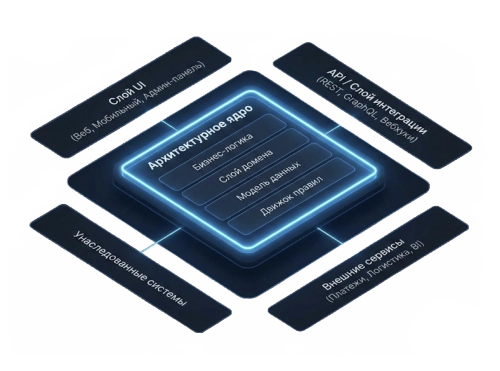
Your Own ERP System or Subscription Cloud Services
As the company grows, additional services appear that solve separate tasks: collecting requests (CRM), accounting, warehouse, logistics, and others. Such solutions usually work on a subscription model and are called cloud services (SaaS). As a result, the company turns out to be tied to different services: their stable operation, terms of use, and regular payment of the subscription. Over time, the question arises — to continue working with a set of disparate services or to create a single system: a website and an ERP that will unite the key processes of the company.
Business without its own ERP
Business with a custom ERP from Webdelo
*Major failures of cloud services occur regularly and can stop the work of thousands of companies:
With your own ERP system, the company does not depend on the decisions of third-party services. In the event of a failure, you can independently restore the system, switch to a backup infrastructure, or launch a spare work scenario.
With a custom ERP, you own the infrastructure on which your business is built and grows.
What do you get?
An ERP is a long-term asset of the company. Such a system makes the business more transparent, manageable, and increases its value for investors.

With Webdelo you get:
Stages of ERP Implementation
A roadmap for launching the system without stopping the business. We implement the ERP in stages: first, we analyze the company's processes, then we design the system, and gradually connect key departments. This approach reduces risks and allows you to get an effect already in the process of implementation.
Analysis of company processes
We study current business processes: work with requests, orders, documents, warehouses, and reporting. We determine bottlenecks, manual operations, and points where time and money are lost.
Formation of the project plan
We define the tasks of the system, priority processes for automation, and implementation stages. We agree on the budget, deadlines, and structure of the project.
Architecture design
We develop the ERP architecture taking into account load, security, and business growth. We lay down integrations with the website, accounting, warehouse, and other systems.
Development of key modules
We create the main modules of the system: management of requests and orders, document flow, warehouse accounting, finances, and management reporting.
Data transfer and integrations
We transfer data from existing systems and configure exchange with external services: CRM, accounting, warehouse programs, payment systems, and the website.
Pilot launch
We launch the system in one business area or in a separate department, check the processes, and correct the operation of the modules.
Full implementation
We connect the remaining departments of the company and transfer the key processes of the business to the new system.
Support and development
We accompany the system after launch, train employees, add new functions, and develop the ERP as the company grows.
Customer Reviews









Assessing Business Readiness
We will start with a preliminary analysis of the project. This includes studying current processes, identifying limitations and growth risks, and also calculating the costs of implementing a new ERP system.
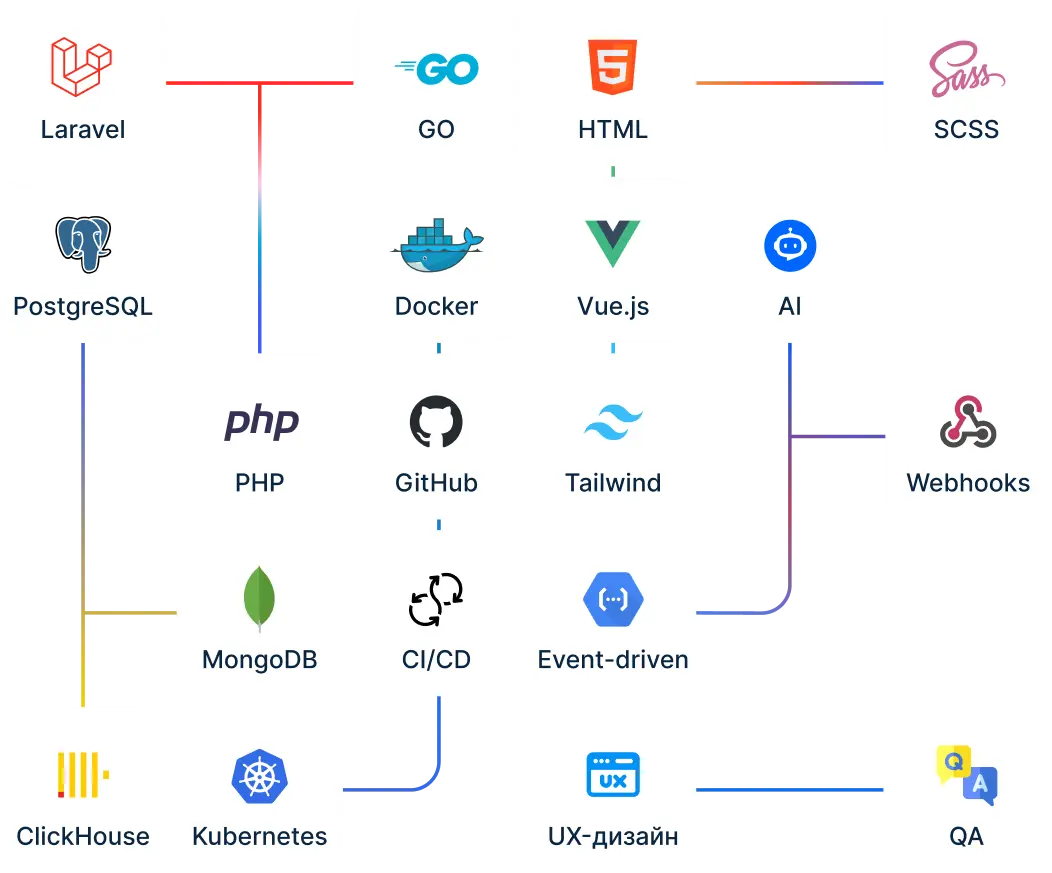
Technology Stack of ERP Development in Webdelo
Clean system architecture
Event-driven architecture
Stream analytics
Automation of development and updates
Code quality check
Multi-level testing
Security control
System stability control
We track the operation of the system, collect technical indicators, and plan actions in advance in case of failures or accidents.
Legal and Information Security of the System
We design the ERP taking into account the requirements of corporate security and data protection. WEBDELO works with companies from the US, Europe, and other countries, therefore the architecture of the system initially takes into account international requirements for the storage of data, financial information, and commercial secrets.

Compliance with international data protection requirements
The architecture of the system takes into account the requirements of laws on the protection of personal data, including GDPR (General Data Protection Regulation) and CCPA (California Consumer Privacy Act). User data can be stored on the servers of the required country, and personal information is protected and, if necessary, can be deleted upon request.

Readiness for financial and IT audits
A strict system of access rights and a log of all financial operations are implemented in the system. This ensures transparency of the system's operation and simplifies passing internal and external audits.

Protection of intellectual property and company data
We work under confidentiality agreements and use an isolated development infrastructure. Financial algorithms, databases, and other internal data of the company remain protected and are not transferred to third-party systems or public services.
Q&A
What to do if business processes change during the development process?
How do you protect the project from budget growth?
What happens if the key architect leaves the project?
Is it possible to safely connect suppliers or B2B clients (corporate partners) to the system?
Is it possible to continue using our current analytics systems?
Will ERP help during an audit or attracting investments?
Ready to discuss your project?

 Web Development Brief


The estimator could not be loaded. Check your connection and try again.